
When the power shifts to the customer
AI is shifting power from platforms and consultancies back to the customer. But it takes domain knowledge, sound architecture and consultants who actually consult.
Category
15 articles in Perspectives
AI is shifting power from platforms and consultancies back to the customer. But it takes domain knowledge, sound architecture and consultants who actually consult.
If your e-commerce agency became three times as efficient, would your invoice shrink to a third? Probably not. AI is killing the billable hour as a business model, and suppliers are caught in a squeeze between shrinking hours and uncertain AI costs. Tobias Bergström walks through the pricing models you'll encounter, explains why a fixed price with AI built in is probably the best choice for you as a buyer, and lists the questions you should ask your agency.
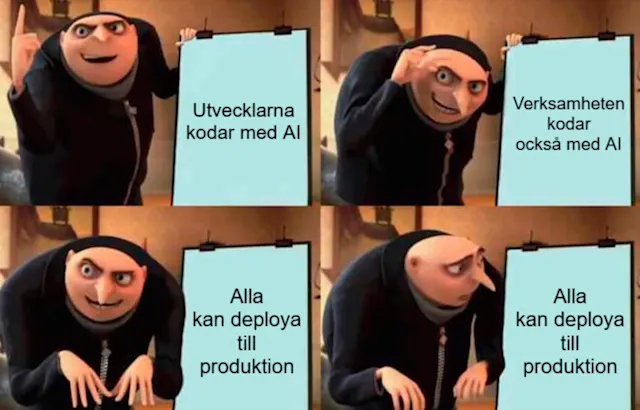
AI does not only make development faster, it moves the capability out into the whole organisation. Suddenly anyone can build and change things in the systems. It is enormously powerful, but combined with old ways of working it leads to either chaos or no effect at all. Here is how you lead the shift from tree-tender to forest ranger before entropy runs away from you.
Technical debt is more than a technical concept, it is a business-critical reality that affects everything from time-to-market to customer experience. In e-commerce, where every millisecond and every click counts, the choices you make in your technical platform can have far-reaching consequences. When quick fixes are prioritised over long-term durability, an invisible but growing debt is built up. It affects not only development speed and stability, but at worst can slow the company's ability to innovate and compete. To face the future the right way, technical debt has to be understood, quantified and managed as the strategic investment it actually is.
For Swedish retailers there are plenty of ways to meet this threat by building on what the Chinese giants cannot offer: strong local brand stories, product safety and sustainability as competitive advantages, and a presence that ties digital and physical commerce together. Temu has no stores. Yet.
There are often two areas being discussed among e-commerce operators, the homepage and bounce rate on the PDP, but we think they should be combined.
Tobias Bergström at Commerce Mind was recently interviewed by the e-commerce company Litium for their newsletter. As a fully independent e-commerce expert, he was asked how he sees the development of B2B e-commerce over the slightly unreal horizon of 5 to 10 years. We thought we would share his thoughts here.
For quite a few years it has been a natural aspiration for ambitious e-commerce operators to move towards a best-of-breed architecture, adding more and more SaaS services. But with a weaker economy, post-pandemic conditions and high interest rates, more players are starting to focus on operational efficiency and cost.
You need to be on top of performance and technology today. Andrew Golrang is a well-known figure in the industry who helped take Cervera to new omnichannel heights and sales records. He has just changed jobs and is now Product Director at Voyado, but he remembers a Black Friday from long ago.