
When the power shifts to the customer
AI is shifting power from platforms and consultancies back to the customer. But it takes domain knowledge, sound architecture and consultants who actually consult.
Category
8 articles in Organization
AI is shifting power from platforms and consultancies back to the customer. But it takes domain knowledge, sound architecture and consultants who actually consult.
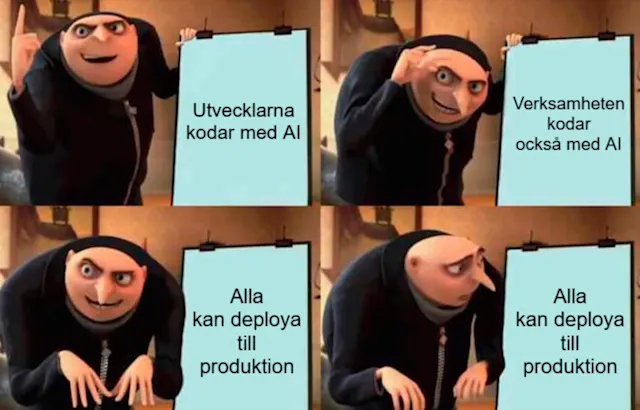
AI does not only make development faster, it moves the capability out into the whole organisation. Suddenly anyone can build and change things in the systems. It is enormously powerful, but combined with old ways of working it leads to either chaos or no effect at all. Here is how you lead the shift from tree-tender to forest ranger before entropy runs away from you.
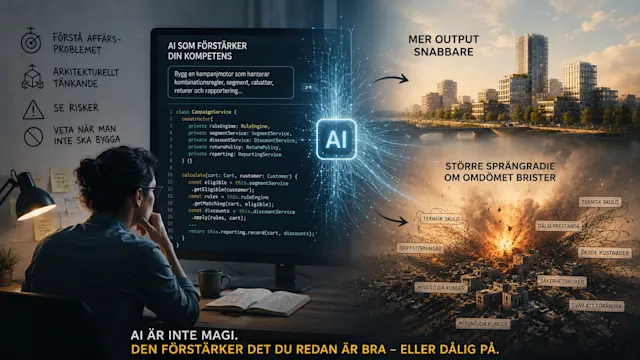
AI makes it possible to produce code faster than ever, but more code does not automatically mean more value. What AI really does is amplify the skill and judgement already present in the person or team using it. That makes the ability to understand the problem, spot risks and know what not to build more important than ever.
Tobias Bergström at Commerce Mind was recently interviewed by the e-commerce company Litium for their newsletter. As a fully independent e-commerce expert, he was asked how he sees the development of B2B e-commerce over the slightly unreal horizon of 5 to 10 years. We thought we would share his thoughts here.
Finding great developers in today's market is a challenge, everyone is busy and rates are high, but where do you even start looking? I sat down and put together 3 different strategies for casting as wide a net as possible.
Is your company also chipping away at an RFP or RFI with a hefty Excel list of requirements attached? Then you are far from alone, and this article is for you. After reading and answering a great many procurement documents, I have a good sense of what the process looks like and how little it has changed over time. Today the process is set up so the platform and vendor can build their answers based on your requirement list and wishes, which you have been kind enough to share with a selection of platforms and partners.
One thing I have been told over the years is that I often manage to put together good teams, teams that are efficient, that deliver, and that enjoy working together. What is the secret to building a team like that, and how do you do it?
If we view e-commerce as core business, why are we so inclined to hand the entire responsibility for developing it over to external vendors? We very rarely do that for other sales-critical or operationally critical activities. Taking control over your own e-commerce destiny and starting to lead development yourself, with employees or hired-in expertise, is a clear trend in the market today. The alternative can be too embarrassing for those who understand what it means. Here I try to give some background on the phenomenon of 'insourcing e-commerce development' and offer a few concrete tips and tricks to take with you if you are thinking along those lines.