Mistakes people make when choosing an e-commerce system
Choosing an e-commerce system is something you end up doing surprisingly often as a successful e-commerce operator. You start with a simple system that you outgrow. You switch, some things get better, some get worse. A few years later it is time again. But how do you choose the right one? How do you avoid buying a pig in a poke?
Choosing an e-commerce system is something you end up doing surprisingly often as a successful e-commerce operator. You start with a simple system that you outgrow. You switch, and some things get better while some get worse. A few years later it is time again. But how do you choose the right one? How do you avoid buying a pig in a poke?
The first mistake people often make is starting the selection process too late. You wait until the current system is at breaking point, and because you have so much else to do, you end up choosing the vendor with the prettiest PowerPoint and the most polished sales arguments. You have to understand what you need and what you are buying, and gaining that understanding will take time and energy.
The second mistake people often make is not really taking ownership of the choice they make. You buy something with certain expectations, and when your expectations are not met you ring up and shout at the vendor. Which of course is your right if you got something other than what you bought, but it rarely helps. Buying an e-commerce system as an e-commerce operator is not entirely unlike buying a house. When you buy something so central to your business and your daily life, you have to take ownership of that decision. You have to dig into every possible detail to really understand the choices you are making, because they will either affect you for several years to come, or they will force you through the same journey again very soon with a new choice.
The third mistake is to believe that it is entirely up to the vendors responding to the procurement to impress you while you lean back. Because it is such an important decision, you need to put in effort to see through the glossy PowerPoints with the big numbers. Make sure to get to speak with people at the vendors who are not normally part of a procurement. Those people will often give you a less made-up picture of reality.
The fourth mistake is to believe that everything will be perfect with the next solution. Every problem you have ever had will be solved and now, finally, there will be time to work through those unread emails. The truth is more that yesterday's problems disappear and new problems appear. Ask clear and direct questions of every vendor during the procurement about where the weaknesses of the new solution will lie. Ask what problems and challenges you can expect. The vendors who answer honestly and with examples of where other customers have had challenges are the interesting ones. You will have problems with the new solution, but at least you want to avoid unexpected problems.
The fifth mistake is to rely too much on what colleagues in the industry have chosen. Reference calls are important, but use them to strengthen the choice you already want to make rather than letting them guide you to a choice. That another e-commerce operator has made certain choices does not mean those are the right choices for you. The best e-commerce operators I know are the ones who have the knowledge to go their own way.
Choosing a system is hard, perhaps above all because there is no right or wrong. Different systems suit different types of e-commerce operators. A modern e-commerce operation also often involves many different systems that have to talk to each other, which makes it all even more complicated to understand. Do not be afraid to get help. It is a decision that will follow you for several years. It is worth consulting friends in the industry or independent experts one extra time before you make the choice.
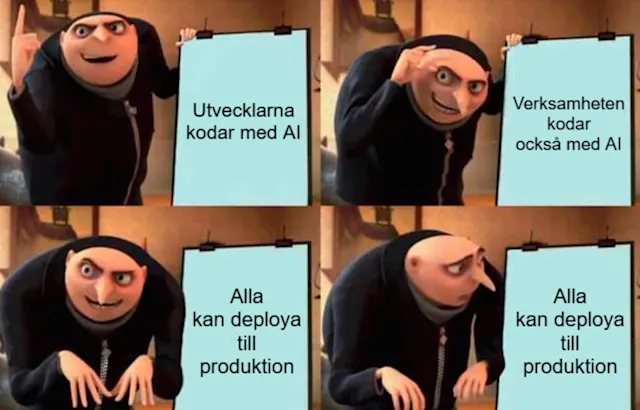
AI does not only make development faster, it moves the capability out into the whole organisation. Suddenly anyone can build and change things in the systems. It is enormously powerful, but combined with old ways of working it leads to either chaos or no effect at all. Here is how you lead the shift from tree-tender to forest ranger before entropy runs away from you.
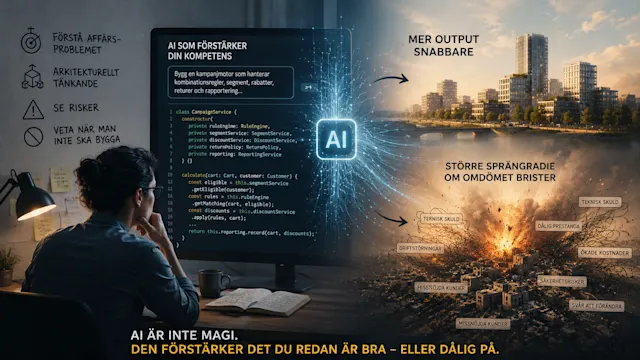
AI makes it possible to produce code faster than ever, but more code does not automatically mean more value. What AI really does is amplify the skill and judgement already present in the person or team using it. That makes the ability to understand the problem, spot risks and know what not to build more important than ever.
Technical debt is more than a technical concept, it is a business-critical reality that affects everything from time-to-market to customer experience. In e-commerce, where every millisecond and every click counts, the choices you make in your technical platform can have far-reaching consequences. When quick fixes are prioritised over long-term durability, an invisible but growing debt is built up. It affects not only development speed and stability, but at worst can slow the company's ability to innovate and compete. To face the future the right way, technical debt has to be understood, quantified and managed as the strategic investment it actually is.